Transforming your home’s exterior begins with smart color choices. The right combination of window and siding colors does more than boost curb appeal; it brings out the best in your home’s design and lets your personality shine through the architecture. Approaching color selection with strategy and creativity can make a dramatic difference. If you’re exploring how to start, our guide to matching window trim with siding is a great resource to set you on the right path for harmonious exteriors that stand out for all the right reasons.
Finding unique color combinations can be challenging, especially with so many options and trends changing year to year. But using a mix of design wisdom, practical tools, and a touch of inspiration ensures your home’s exterior creates a memorable impression and reflects your style from the curb. Beyond aesthetics, exterior choices can also influence durability and performance, as poorly suited materials or installations may contribute to issues such as window seal failure from wind, particularly in areas exposed to strong gusts or seasonal storms.
Success begins with a clear understanding of color trends, homeowner favorites, and timeless strategies that designers return to again and again. These steps can help you navigate every choice, from siding to trim and every accent feature in between. Don’t forget to consider the broader context: your climate, the home’s architectural era, and your neighborhood’s palette all contribute to choices that work beautifully in the long run.
Understanding Color Trends
Staying up to date on color trends not only guides your choices but also ensures your home maintains a fresh, attractive appearance. For instance, a recent national survey showed off-white and cream as the top preferences among American homeowners planning exterior updates for 2025, followed by shades like white, light brown, light gray, and medium blue. These versatile, welcoming tones work well on a variety of homes and climates.
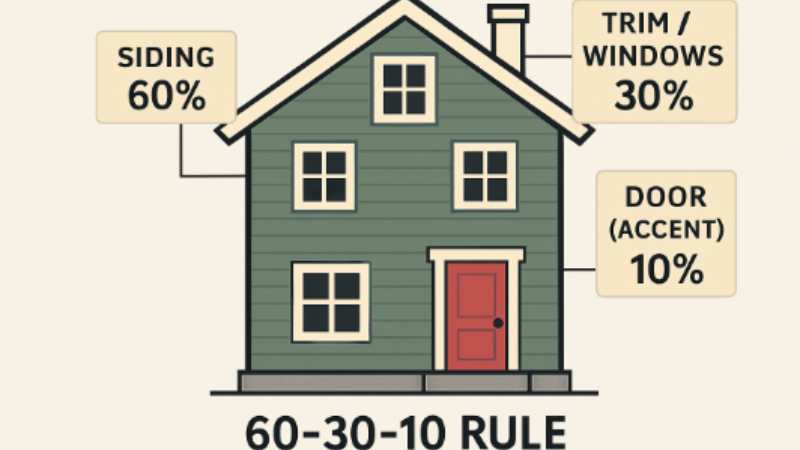
Applying the 60-30-10 Rule
Designers often swear by the 60-30-10 rule for exteriors, breaking your palette into dominant, secondary, and accent colors for a balanced, eye-pleasing effect:
- 60%: Your main siding color sets the home’s tone
- 30%: A secondary shade (such as trim or soffits) frames your windows and roofline
- 10%: The accent color, typically on doors, shutters, or special details, adds personality and focus
This approach keeps the overall look coordinated, minimizing the risk of clashing hues or overcomplicating your home’s appearance. Try out combinations with samples to see how the 60-30-10 principle can transform your home’s exterior, keeping it sophisticated and inviting.
Considering Architectural Style
The style of your home plays a major role in choosing color schemes that resonate. Classic Colonials, for instance, are timeless in elegant contrasts such as gray-blue siding, crisp white trim, and glossy black accents for shutters and the front door. On the other hand, a Craftsman home can handle warmer, earthier tones and deeper accent colors, while modern architecture often shines in monochromatic or high-contrast pairings. For more timeless recommendations tailored by architectural style, see Homes & Gardens’ recommendations, which spotlight color palettes that complement signature historical details or minimalist facades.
Embracing Contrast
One of the easiest ways to make exterior elements pop and highlight beautiful architectural features is to play with contrast. High-contrast pairings, like deep navy or charcoal siding with bright white or pale trim, emphasize interesting textures and lines. For daring homeowners, saturated hues such as black, forest green, or slate blue can serve as bold siding choices, especially when paired with lighter trim or vibrant accent doors. With rich, dark exterior colors trending in 2025, now is the perfect time to experiment with sophisticated boldness that catches every eye on the block.
Testing Before Committing
No matter how certain you feel about a color choice, it can look dramatically different depending on the time of day and weather. Always test a few shades on a discreet portion of your siding, trim, or even a large board moved around the exterior. Pay attention to how sunlight, shadow, and artificial light affect each option. Try viewing your samples at various times throughout the day. This hands-on approach helps avoid surprises and makes sure you love your color choice in every season and lighting scenario.
Factoring in Climate and Surroundings
Where you live should inform your palette as much as what you love. Light-colored siding works best in hot or sunny climates, as it reflects heat and keeps interiors cooler. In cooler or shadier regions, richer colors can add coziness without fading quickly. Beyond climate, look at nearby homes, natural elements, and landscaping. Aim for colors that harmonize with the surroundings, creating a unified effect with trees, stone, and neighboring houses while still celebrating your home’s individuality.
Seeking Professional Advice
If you’re feeling overwhelmed or want expert insights, consulting a designer or color expert can fast-track your decision and help avoid costly mistakes. Professionals combine knowledge of color theory with insight into local trends, architecture, and resale value to deliver truly personalized recommendations. Many exterior paint and siding brands even offer virtual visualization tools and color consultations so you can experiment safely before committing to a palette.
Final Thoughts
Picking the perfect window and siding colors involves a blend of understanding current trends, applying foundational design principles, and tailoring choices to your home’s unique character. With a thoughtful approach and strategic planning, you can achieve a look that’s both fresh and timeless, boosting curb appeal for years to come.